
Top Fax Alternatives for 2026: What to Use Instead
Let's be honest: nobody wakes up excited to send a fax. If you're looking at fax alternatives, you're probably wondering whether there's a better way to send documents securely. The answer depends on what you're sending and who you're sending it to.
The Real Question: Why Do You Fax?
Before jumping to alternatives, identify the reason fax is part of your workflow:
- The recipient requires fax — Courts, government agencies, and some healthcare providers only accept fax.
- You need delivery confirmation — Fax provides a verifiable transmission report.
- You're signing documents — Historically, signed documents were faxed back. E-signatures now handle this.
- Security concerns — Some organizations believe fax is more secure than email.
If the recipient mandates fax, you're stuck — but online fax services make it painless. For everything else, there are better options.
Alternative 1: E-Signature Platforms
If you're faxing mainly to exchange signed documents, e-signature tools replace the entire process:
| Platform | Free Tier | Legally Binding? | Best For |
|---|---|---|---|
| DocuSign | 3 docs/mo | ✅ Yes | Enterprise, real estate |
| HelloSign | 3 docs/mo | ✅ Yes | Dropbox users, startups |
| Adobe Sign | Trial only | ✅ Yes | Adobe ecosystem users |
| PandaDoc | Free plan | ✅ Yes | Sales teams, proposals |
| SignNow | Trial only | ✅ Yes | Budget-conscious SMBs |
E-signatures are legally binding under the ESIGN Act and UETA in the US, and eIDAS in the EU. For most contracts, they're faster, cheaper, and more trackable than fax.
Alternative 2: Secure File Sharing
If you're faxing to deliver documents securely, modern file-sharing tools offer superior security:
- Google Drive / OneDrive — Share with specific people, set expiration dates, track who accessed the file.
- Tresorit — End-to-end encrypted cloud storage. Swiss-based, HIPAA compliant.
- Box — Enterprise-grade security with granular access controls and compliance certifications.
Unlike fax, cloud-shared files maintain full quality — no degradation from the fax encoding process.
Alternative 3: Encrypted Email
Standard email is often cited as "less secure than fax." But encrypted email changes the equation:
- ProtonMail — End-to-end encryption, zero-access architecture, Swiss privacy laws
- Tutanota — Full encryption including subject lines, calendar, and contacts
- Microsoft 365 Message Encryption — Enterprise E2EE within the Outlook ecosystem
For sending sensitive documents, encrypted email is objectively more secure than unencrypted fax.
Alternative 4: Secure Messaging
For quick document exchanges within trusted relationships:
- Signal — E2EE messaging with file sharing. Disappearing messages available.
- WhatsApp Business — E2EE, widely adopted, file sharing up to 2GB.
- Microsoft Teams / Slack — Internal team communication with file sharing and audit trails.
When Fax Is Still the Only Option
Despite all the alternatives, some situations still require fax:
- Government forms — Many agencies still only accept fax submissions for specific forms
- HIPAA workflows — Some healthcare organizations have fax-based processes that haven't been modernized
- International business — Japan and Germany still use fax heavily in business
- Legal filings — Certain courts accept fax but not email
In these cases, online fax services (comparison tools like FaxRadar can help you find the right one) bridge the gap — giving you the digital convenience of email while communicating through the fax network.
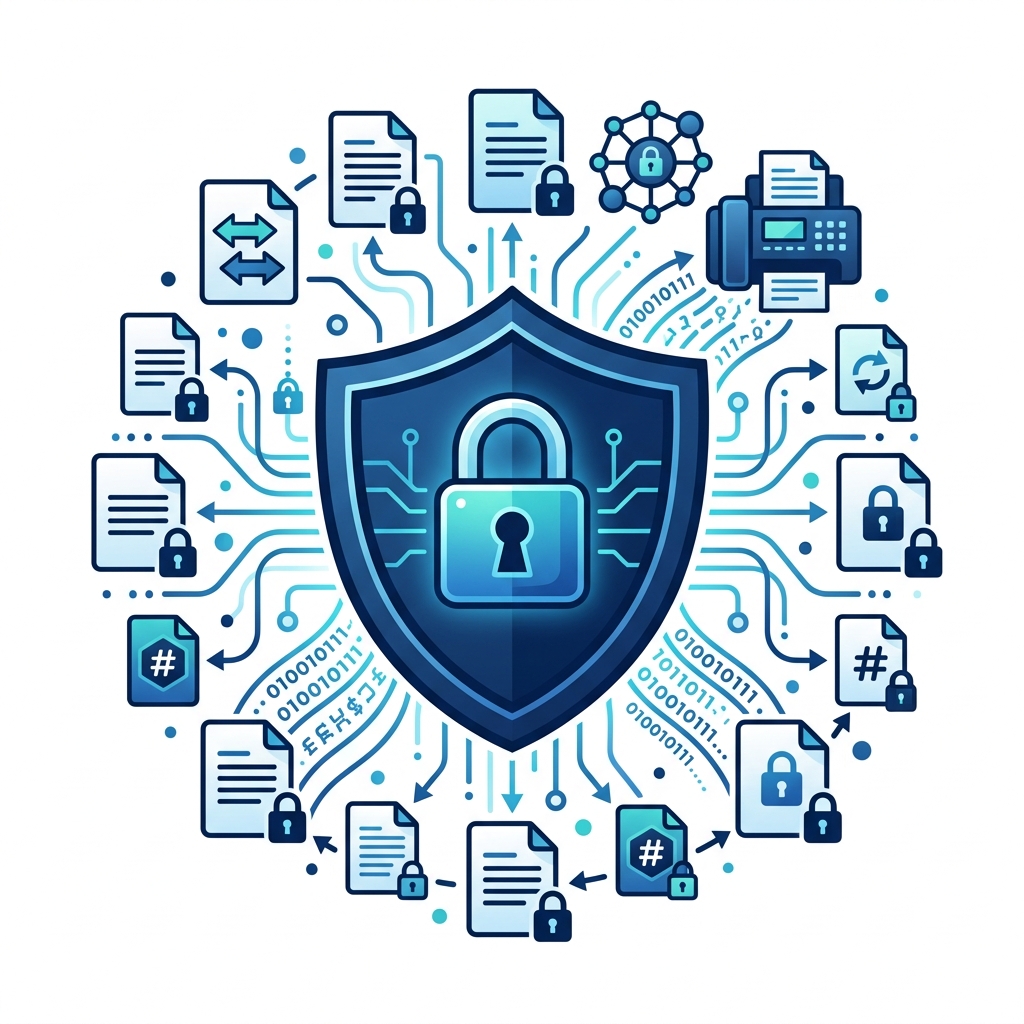
Each alternative excels in different scenarios — the best choice depends on your specific needs.
Decision Framework
- Need signatures? → E-signature platform
- Need to share files securely? → Encrypted cloud storage
- Need to send sensitive text? → Encrypted email or Signal
- Recipient requires fax? → Online fax service